



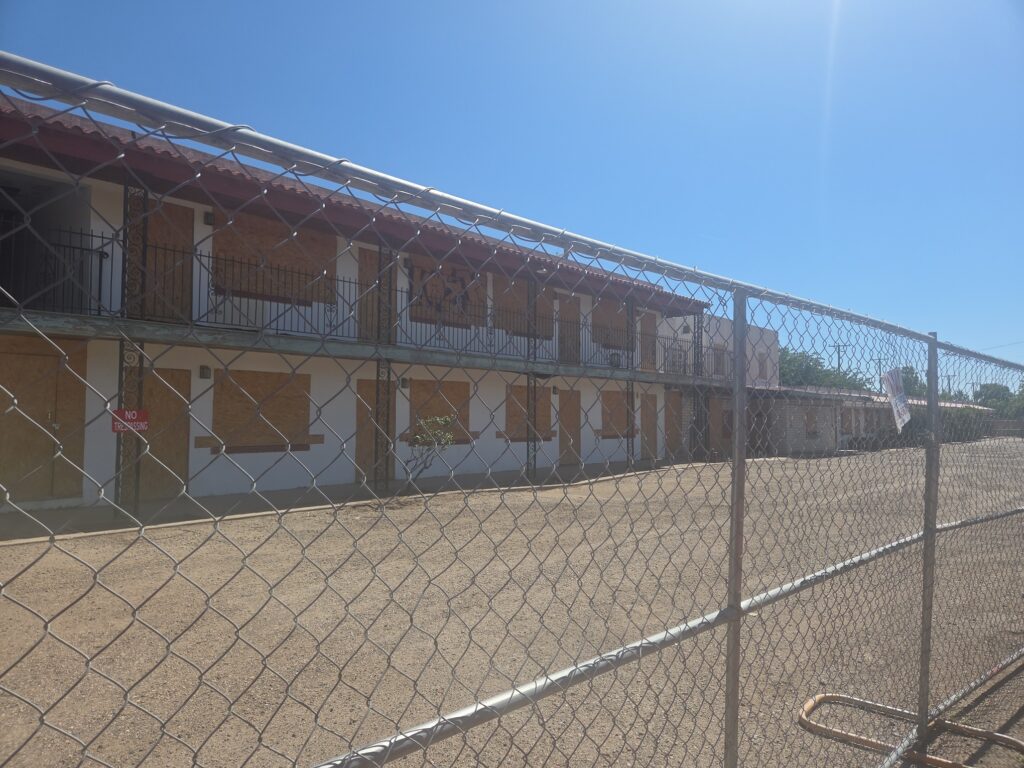
Balboa Site Carries Memories of Deming’s Highway Era as City Looks Toward New Use
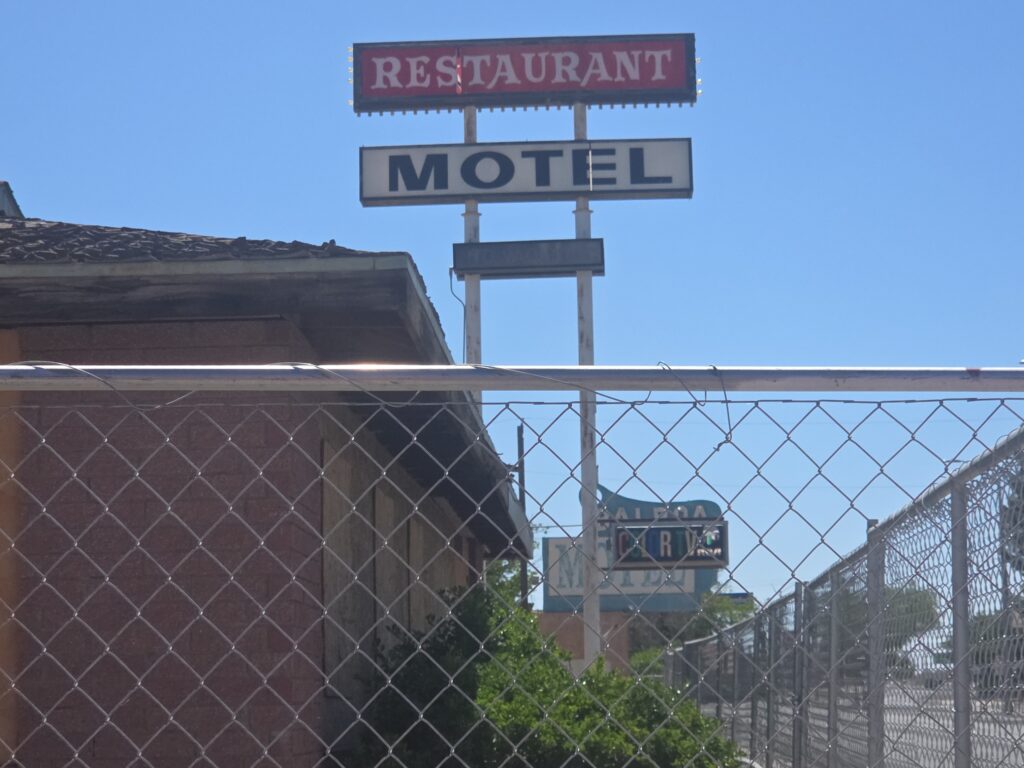
DEMING – The long-vacant Balboa Motel and Restaurant property on West Pine Street may soon lose its aging buildings, but the site itself carries a story that reaches back to the days when Deming was not a place motorists bypassed on Interstate 10, but a place they drove directly through.
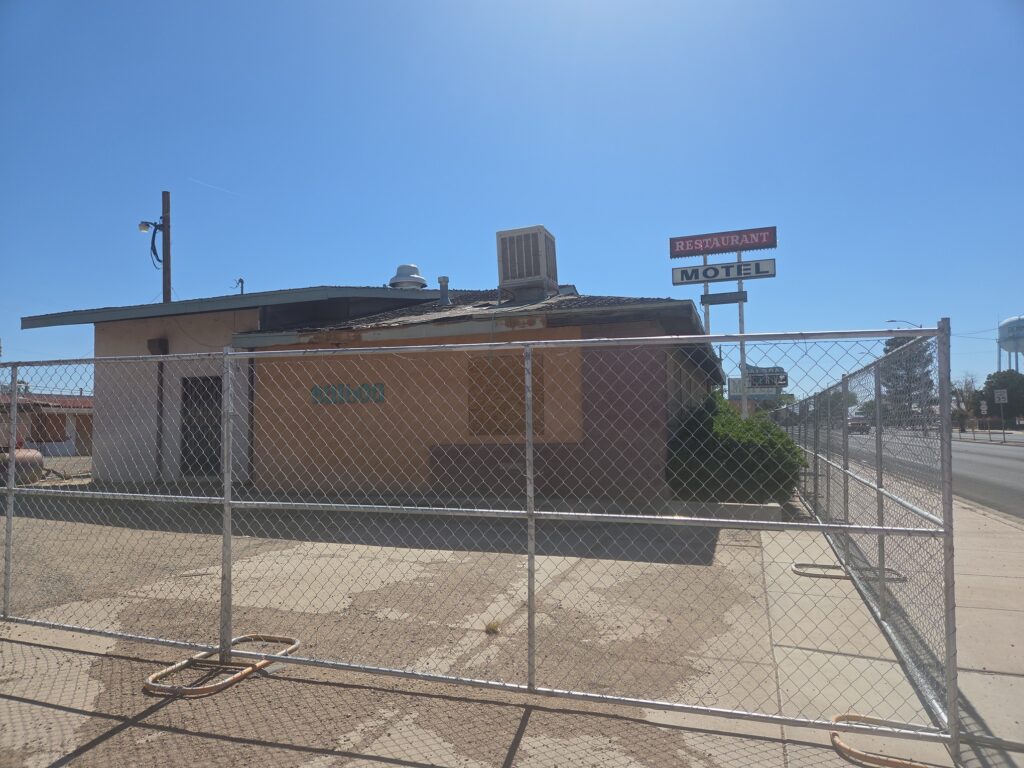
The property across from McDonald’s is expected to be demolished and temporarily converted into a food truck and vendor area while city officials seek public input on the long-term future of the highly visible location.
Deming City Manager Aaron Sera said the city had initially explored whether the former motel could be renovated and used as temporary shelter housing. However, the cost of bringing the aging structures back into usable condition was estimated at more than $1 million, due largely to asbestos concerns and the deteriorated state of the buildings.
That finding shifted the city toward demolition.
Under the city’s current short-term plan, the property would be leveled and used as an unpaved parking and vendor area, with electrical hookups available for approved food trucks and other vendors. Vendors would be required to meet New Mexico food service requirements and obtain proper city licensing. The city expects to charge a minimal fee for utility hookups and use of the property.
But the Balboa site is more than another vacant building on Pine Street. It is one of those places where Deming’s past and present sit side by side — old highway history, mid-century travel culture, local memories, city redevelopment and a changing downtown corridor all wrapped into one property.
Public environmental records list the current Balboa Hotel/Motel property at 708 W. Pine Street as a 0.85-acre site containing a former motel and restaurant, caretaker apartment and swimming pool. The New Mexico Environment Department’s Targeted Brownfield Assessment site list describes the motel building as a two-story, 7,578-square-foot, 22-unit building and states that the motel and restaurant were constructed in 1978. The same record identifies asbestos-containing material, lead-based paint and mold as environmental concerns, and notes the property has been vacant for many years. (New Mexico Environment Department)
That 1978 date appears to apply to the later motel-and-restaurant structures many Deming residents remember: the two-story motel, restaurant and in-ground pool era of the Balboa property.
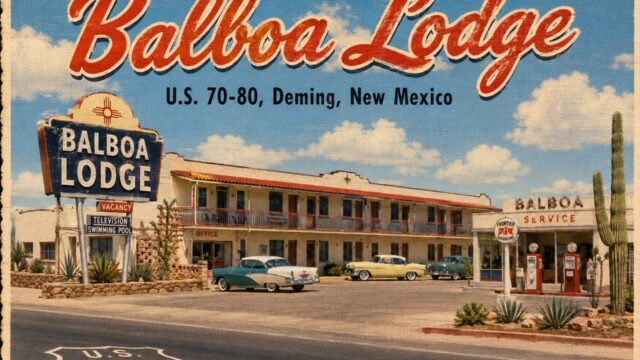
However, the Balboa name appears to have roots that may go back earlier, into Deming’s pre-interstate roadside era. Vintage postcard records show a “Balboa Lodge” on U.S. 70-80 in Deming. One postcard archive describes the Balboa Lodge as located “six blocks west of traffic light,” calling it “Deming’s newest and finest,” with large soundproof rooms, complete Shell service and ownership by the Pearce family — Bob, Bob Jr. and Jerry. The postcard also describes it as the only two-story lodge in southwest New Mexico. (CardCow Vintage Postcards)
That postcard history is important because it places the Balboa name in Deming’s U.S. 70-80 highway period, when Pine Street was part of the main east-west travel route through town. Before Interstate 10 changed the flow of traffic, U.S. 70 and U.S. 80 carried travelers directly through Deming, bringing motorists past motels, cafes, service stations and roadside businesses that depended on highway traffic.
A separate vintage postcard listing identifies a “1961 Balboa Motel Deming New Mexico” postcard on U.S. Highway 70-80, further supporting that the Balboa name was associated with Deming lodging before the 1978 construction date listed for the later motel and restaurant structures. (eBay)
That means the most accurate way to describe the history is with care: the Balboa name appears in Deming lodging and highway-travel history by at least the early 1960s, and possibly earlier, while public environmental records identify the later Balboa Motel and Restaurant structures at 708 W. Pine Street as having been built in 1978.
The highway context helps explain why the property mattered. U.S. 80 was once a major transcontinental route, and federal highway history notes that U.S. 80 was gradually shortened as interstate highways took over long-distance traffic, with Arizona’s section west of Benson removed in 1989 and additional New Mexico and Texas sections eliminated in 1991. (Federal Highway Administration)
Modern road references still identify Pine Street in Deming as part of the old U.S. 70-80 corridor. AARoads notes that Business Loop I-10, or Pine Street, turns north from old U.S. 70-80, now NM 549, to rejoin Interstate 10 at Exit 85. (AARoads)
In other words, the Balboa was not simply built beside a street. It stood along one of the old roads that helped bring America through Deming.
For travelers of that era, a place like the Balboa would have meant more than a room key. It meant a stop after a long stretch of desert highway. It meant gasoline, food, shade, a bed, maybe a pool for children who had been riding all day, and a chance for families to rest before heading west toward Lordsburg and Arizona or east toward Las Cruces and El Paso.
Its later years were not as glamorous. Like many older highway motels across the Southwest, the Balboa eventually became a reminder of how travel patterns changed. Interstate traffic moved faster. Motorists stayed at newer chain hotels near exits. Older roadside properties became harder to maintain, and buildings once designed for constant motion slowly became still.
Now, city officials are looking at the site not as a relic, but as an opportunity.
Sera said Deming officials do not currently have a predetermined long-term use planned for the property. Instead, the city plans to hold public meetings to gather community input before deciding what should come next.
Ideas discussed so far include selling the property, developing a recreation center, creating a city park or pursuing another community-based use. In the meantime, the temporary food truck and vendor concept would allow the cleared property to serve a public purpose while larger conversations continue.
If the plan moves forward, the Balboa’s next chapter may look very different from its past. Where travelers once stopped for rooms, meals, fuel and a break from the highway, residents may one day stop for lunch, local vendors, public events or a future community gathering space.
The buildings may come down, but the site’s history will not disappear with them.
From its apparent roots in Deming’s U.S. 70-80 highway days, to its documented 1978 motel-and-restaurant construction, to its long vacancy and possible rebirth as a public vendor space, the Balboa property remains one of those places that tells a familiar Deming story: the road changed, the town changed, and now the community gets a chance to decide what comes next.
John Krehbiel – Bravo Mic Communications – [email protected]